Swirltastic: A Hand-Drawn Display Font with Expressive Variable Line Widths
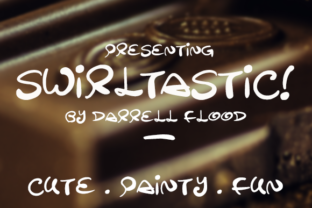
When selecting a typeface for a project, the choice often comes down to balancing personality with readability. Decorative fonts, in particular, can be both a powerful asset and a tricky commitment. One such option in this category is Swirltastic, a hand-drawn display font created by Darrell Flood. It is described as a swirly, curly typeface with expressive variable line width, tailored for decorative and sweet-related themes. This article offers a balanced evaluation of Swirltastic, exploring its strengths, tradeoffs, and practical fit for different design needs, so you can decide whether it aligns with your goals.
What Is Swirltastic?
Swirltastic is a display font built on hand-drawn letterforms. Unlike many digital fonts that rely on uniform stroke thickness, Swirltastic features variable line widths that give each character a loose, organic feel. The letters are swirly and curly, with flourishes that evoke a sense of motion and whimsy. As a product of Darrell Flood’s design work, it fits into the broader category of expressive, illustrative typefaces meant to stand out rather than blend in. It is not intended for body text or long reading passages. Instead, its primary purpose is decorative—adding visual interest to headlines, logos, invitations, packaging, and other design elements where the font itself is part of the artwork.
Because Swirltastic is a hand-drawn font, each character carries subtle irregularities. These quirks are intentional and contribute to its charm, but they also introduce considerations around legibility, scaling, and consistency that are important to understand before committing to it for a project.
Exploring the Appeal: Key Characteristics and Use Cases
The appeal of Swirltastic lies in its expressiveness. Designers who choose this font are typically looking for something that feels personal, playful, or artisanal. The variable line thickness creates a sense of pressure and flow, as if drawn with a nib pen or brush. This quality makes Swirltastic particularly effective in contexts where you want the text to convey handmade warmth—such as bakery menus, greeting cards, wedding invitations, children's book covers, or social media graphics for dessert brands.
Another key feature is the variety of swirly embellishments built into the letterforms. These are not simply serifs or decorative add-ons; they are integral to the character shapes. For projects where the theme is sweet, romantic, or nostalgic, these curls and loops reinforce the mood without requiring additional illustration elements. The font can carry much of the emotional weight of the design on its own.
However, it's worth noting that Swirltastic's distinct personality also narrows its range of appropriate applications. It is not a neutral or versatile workhorse font. Its strongest impact comes when used sparingly and with intention.
Benefits and Tradeoffs of Using Swirltastic
Every font choice involves tradeoffs, and Swirltastic is no exception. On the benefit side, the primary advantage is its visual distinctiveness. In a crowded design landscape, a font like Swirltastic can help a brand or project stand out, especially in niche markets like confectionery, stationery, or boutique event planning. The hand-drawn quality also communicates authenticity and craftsmanship, which can be valuable for small businesses or artisanal product lines.
Another benefit is the font's adaptability within its niche. Because the line width varies naturally, Swirltastic works well at larger sizes where the curves and flourishes become details that reward closer inspection. It also pairs well with minimalist or neutral design elements, allowing the font to act as the primary visual focal point.
On the tradeoff side, legibility is a significant consideration. The swirly, curly nature of the letterforms means that some characters may be harder to distinguish at smaller sizes or in longer strings of text. For example, the lowercase 'e' and 'c' or the uppercase 'G' and 'O' might look similar in certain contexts. This makes Swirltastic less suitable for small subtext, captions, or any situation where quick reading is essential. Designers should plan to use this font at display sizes—typically 24 points or larger—to ensure readability.
Another tradeoff involves consistency across characters. Because Swirltastic is hand-drawn, not all letters have the same visual weight or alignment. This can add to its charm, but it also means that kerning and spacing may require manual adjustment. In professional design software, you may need to spend extra time fine-tuning letter pairs to achieve a balanced composition. The font file may not include extensive kerning tables, so be prepared for some hands-on work.
Finally, there is the consideration of file format and licensing. As a font created by an independent designer, Swirltastic may be available through various foundries or marketplaces. The licensing terms—whether for personal use, commercial use, or embedding in digital products—can vary. Always verify the terms before using the font in a commercial project to avoid legal issues.
Strong-Fit Scenarios: Where Swirltastic Excels
Swirltastic performs best in projects where the goal is to evoke a specific emotional or thematic response, and where the text is short and prominent. Here are some scenarios where it is a strong fit:
- Branding for sweet or artisanal products: Bakeries, candy shops, ice cream parlors, and tea rooms can use Swirltastic in logos, signage, and packaging to communicate a sense of homemade quality and indulgence.
- Event invitations and stationery: Weddings, baby showers, birthday parties, and other celebratory events benefit from the font's romantic and playful curls. It works well on invitations, thank-you cards, and place cards.
- Social media graphics: For Instagram posts, Pinterest pins, or Facebook covers, Swirltastic adds personality to quotes, announcements, and promotional images without needing additional illustration.
- Children's book covers or titles: The whimsical, hand-drawn quality appeals to young audiences and sets a tone of imagination and fun.
- Decorative headlines in blogs or websites: When used sparingly for headings, Swirltastic can introduce visual contrast in an otherwise clean layout.
In these situations, the font's expressiveness is an asset, and its limitations around legibility and scaling are less of an issue because the text is short, large, and contextually supported by other design elements.
When Alternatives May Be Worth Considering
Despite its charm, Swirltastic is not the right choice for every project. There are several situations where alternative fonts may serve you better:
- Long-form text or body copy: For paragraphs, articles, or any extended reading, a clean serif or sans-serif font is far more legible and comfortable. Swirltastic should never be used for body text in print or digital media.
- Professional or corporate branding: If the brand identity needs to convey authority, trust, or minimalism, a hand-drawn swirly font can appear too informal or whimsical. In such cases, consider a refined script or a geometric sans-serif instead.
- Multilingual projects: Swirltastic may not include extended character sets for languages with diacritics or non-Latin scripts. Always check the glyph coverage before committing to a project that requires internationalization.
- Small-scale applications: For product labels, business cards, or small advertisements where text size is limited, Swirltastic's details may get lost. A simpler display font with clearer letterforms will perform better at small sizes.
- High-volume or fast-paced production: If you need to generate a large amount of text content (e.g., menu items, product descriptions), the manual effort required to kern and space Swirltastic may become impractical. A more consistent decorative font could save time.
In these scenarios, the tradeoffs of Swirltastic outweigh its benefits. The key is to evaluate your project's specific constraints around legibility, production speed, and brand tone before making a choice.
Practical Decision-Making Insights
To determine whether Swirltastic is right for your project, consider these questions:
- What is the primary function of the text? If the text is meant to be read quickly or convey complex information, Swirltastic is likely not the best choice. If the text is meant to be seen as a visual element, it could be ideal.
- At what size will the font be displayed? If you can use it at 24 points or larger, the details and variable line widths become assets. If the text needs to be smaller, look for a more legible alternative.
- What emotional tone are you aiming for? Swirltastic communicates sweetness, playfulness, and handcrafted quality. If your brand voice is serious, modern, or minimal, the font may conflict with the intended message.
- How much control do you have over spacing and layout? If you have the time and skills to adjust kerning manually, you can make Swirltastic look polished. If you need a font that works out of the box, test it first in your project environment.
- Does the font need to work across multiple languages or platforms? Check the character set and licensing terms early in the selection process to avoid surprises.
It can also be helpful to test Swirltastic in a mockup of your actual project before making a final decision. Generate a few sample headlines or logotypes, view them at the intended size, and evaluate both the visual impact and the reading ease. Sometimes what looks great in a font preview behaves differently in a full layout with graphics, colors, and other elements.
If you are comparing Swirltastic with other decorative fonts, look for options that offer similar hand-drawn expressiveness but with different tradeoffs—for instance, fonts with more uniform line widths for better consistency, or fonts with more restrained flourishes for improved legibility at smaller sizes. The right choice depends on which balance of qualities best serves your specific project goals.
Is Swirltastic Right for You?
Swirltastic is a distinctive, hand-drawn display font that excels in decorative and sweet-themed applications. Its variable line width and swirly character shapes give it a warm, artisanal feel that can elevate branding for bakeries, invitations for celebrations, and playful social media content. However, its limitations around legibility at small sizes, consistency between characters, and appropriateness for professional or long-form contexts mean it is not a universal solution.
For designers and brand owners who value personality and are willing to invest time in careful spacing and sizing, Swirltastic can be a worthwhile addition to the toolkit. For those who need versatility, readability, or ease of use across diverse outputs, exploring alternative decorative fonts may be more practical. The most effective use of Swirltastic comes from understanding what it offers and where its boundaries lie, then applying it intentionally within those bounds. By weighing the considerations outlined here, you can make a confident, informed choice that serves your project and your audience well.