Severn: A High-Contrast Sans Serif Font for Modern Typography
When evaluating typefaces for a project, the balance between readability and visual impact often determines the final choice. Severn enters this discussion as a high-contrast sans serif font that combines bold proportions with contemporary styling. Unlike many sans serif families that prioritize neutrality, Severn makes a deliberate visual statement while maintaining functional versatility. This article examines what Severn offers, where it excels, and what tradeoffs designers should consider before committing to it.
What Is Severn?
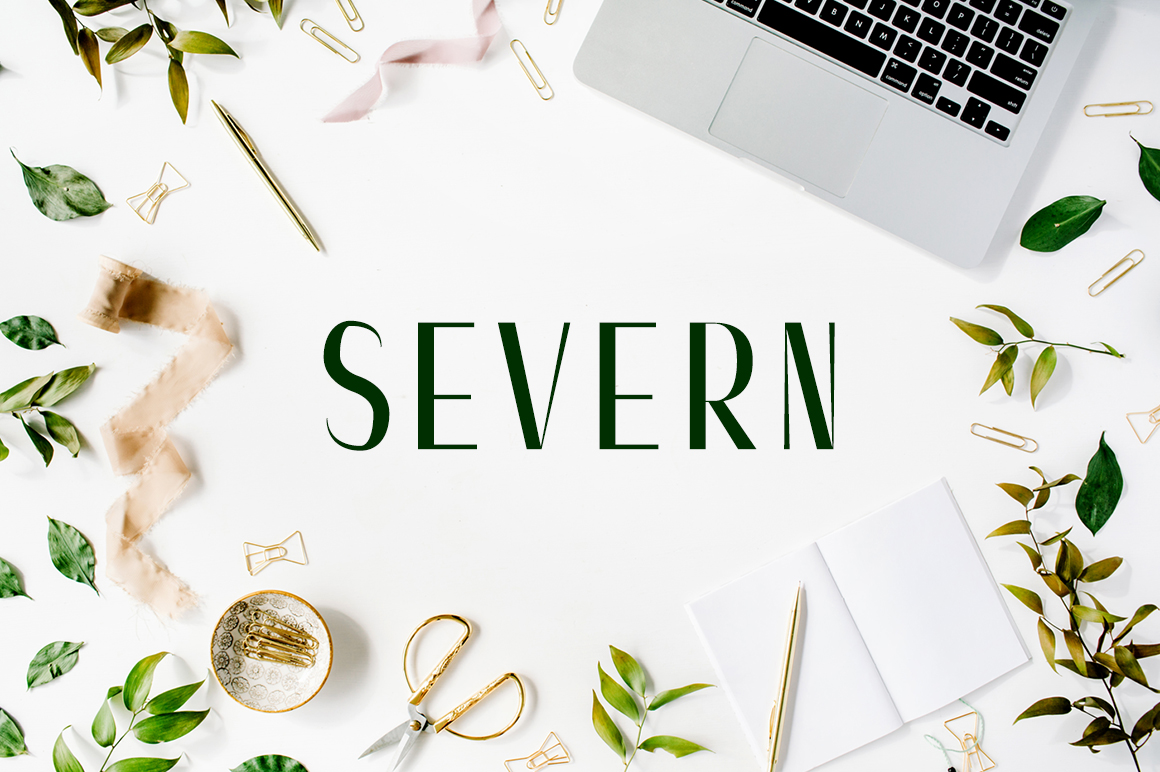
Severn is a sans serif typeface defined by its high stroke contrast and notably bold x-height. The letterforms are constructed with a clean, geometric foundation but avoid the rigid uniformity found in purely geometric sans serifs. Instead, Severn introduces subtle variation in stroke thickness, giving each character a distinct presence without sacrificing legibility at smaller sizes.
The font family includes multiple weights, ranging from light to extra bold, often with corresponding italics. This range provides designers with enough flexibility to build hierarchical typographic systems without mixing font families. The high contrast is consistent across weights, meaning the light version still exhibits noticeable variation between thick and thin strokes, while the bold versions amplify that contrast for greater impact.
Severn was designed with contemporary applications in mind. Its proportions lean toward the generous side, with tall lowercase letters and open apertures that improve readability in digital environments. The overall aesthetic is neither purely minimalist nor decorative—it occupies a middle ground where clarity meets character.
Why Severn Attracts Attention
Several qualities make Severn worth considering. The first is its visual distinctiveness. Many sans serif fonts aim for invisibility, letting content speak without typographic interference. Severn does not disappear. Its high contrast and bold height give it a recognizable silhouette that can anchor a brand identity or editorial design.
Another draw is the weight range. Designers working on complex projects often need a single family that can handle headlines, subheadings, body text, captions, and callouts. Severn's multiple weights allow for this kind of scalability. The lighter weights work well for longer reading passages, while the heavier weights command attention in titles and displays.
The contemporary appeal is also relevant. Severn does not look dated. Its proportions and contrast ratios align with current typographic trends that favor openness, warmth, and slight personality over sterile uniformity. Projects aiming for a modern but not trendy appearance may find Severn a reliable choice.
Benefits of Using Severn
One practical benefit is improved readability at medium to large sizes. The tall x-height means lowercase letters occupy more vertical space, making them easier to distinguish. This is especially useful in UI design, signage, and presentation materials where text must be scanned quickly.
The high contrast also helps when layering text over backgrounds. Thicker vertical strokes and thinner horizontals create a clear distinction that reduces visual clutter. In branding contexts, this contrast can become a recognizable element—a signature that sets the typeface apart from flatter, more uniform alternatives.
Severn's multiple weights give designers control over emphasis without relying on additional formatting. A single weight change communicates hierarchy more cleanly than a switch between bold and regular within a less versatile family. For projects with tight style guides, this reduces decision fatigue and maintains consistency.
Tradeoffs and Considerations
No typeface is universally ideal, and Severn comes with tradeoffs that should be weighed carefully. The most significant is its performance at very small sizes. High contrast can cause thin strokes to disappear or become uneven when rendered at low resolutions or small point sizes. If your project requires extensive body text at 10pt or smaller—especially on screens—Severn may present legibility challenges. In these cases, a lower-contrast sans serif or a dedicated text face might serve better.
The bold height also affects spacing. Tall lowercase letters reduce the perceived space between lines, which can make dense paragraphs feel cramped if leading is not adjusted. Designers should plan for generous line-height values, typically 1.5x to 1.8x the font size, to maintain readability. This may conflict with layout constraints in space-limited formats like mobile interfaces or print brochures.
Another consideration is brand personality. Severn's visual character is not neutral. If a project demands absolute objectivity or needs to fade into the background, Severn may draw too much attention. It works best when the typography is intended to contribute to the overall tone rather than remain invisible.
Licensing and cost are practical factors. Severn is not always available as a free font. Commercial licenses vary by foundry, and if your project spans multiple platforms or requires web embedding, the cost can accumulate. Always verify the license terms before committing to a family for long-term use.
Where Severn Excels
Severn is a strong fit for branding and identity projects. Its distinctive proportions make it memorable in logos, business cards, and website headers. The weight range allows for consistent typographic systems across collateral, from letterhead to social media graphics.
Editorial design is another area where Severn performs well. Magazines, annual reports, and digital publications that rely on visual hierarchy benefit from the contrast between light body text and bold headlines. The font family can carry a full publication's typography without needing a secondary face, simplifying the design process.
Digital interfaces that prioritize clarity at moderate to large sizes can also use Severn effectively. Dashboard designs, data visualizations, and app interfaces where text appears at 14pt or above can leverage the readability of the tall x-height. The open apertures improve character recognition in navigation menus and call-to-action buttons.
Presentation design benefits as well. Slides with limited text per slide allow Severn's bold weights to make an impact without overwhelming the viewer. The high contrast ensures legibility from the back of a room, even when projected.
When Alternatives May Be Worth Considering
If your project involves extensive small body text, especially in print or low-resolution digital environments, a lower-contrast sans serif like Source Sans, Noto Sans, or Open Sans may be a better choice. These faces are optimized for sustained reading at small sizes and lack the stroke variation that can cause issues at reduced scales.
For projects requiring extreme neutrality—such as legal documents, academic papers, or data-heavy reports—a typeface like Helvetica, Inter, or Roboto offers less visual personality and greater emphasis on content alone. Severn's distinctiveness, while advantageous in many contexts, can become a distraction when the goal is pure information delivery.
If budget is a primary concern, open-source alternatives provide similar high-contrast sans serif characteristics. Fonts like Work Sans or Jost offer geometric construction with some contrast variation, though neither matches Severn's specific proportions or bold height. The tradeoff is cost savings in exchange for a less distinctive appearance.
In multilingual projects, check Severn's character coverage. Some high-contrast fonts limit support for non-Latin scripts or specialized typographic features. If your audience reads in Cyrillic, Greek, or East Asian scripts, verify that Severn includes the necessary glyphs before proceeding.
Decision-Making Insights for Designers
When evaluating Severn for a project, start by mapping your text size ranges. If the majority of your content falls between 14pt and 48pt, Severn is likely a strong candidate. If body text sits at 10pt or below, test the font at actual rendering sizes before making a final decision. Print a sample or view it on the target device to confirm thin strokes remain visible.
Assess your brand's visual goals. If the typography should reinforce a modern, confident, or slightly bold personality, Severn aligns well. If the brand demands understatement or traditional formality, a less assertive face may fit better.
Consider your medium. For print projects with high-resolution output, Severn's contrast becomes a strength. For digital projects with variable screen quality, test across devices to ensure the thin strokes survive different pixel densities and rendering engines.
Finally, review the full family. If you need more than three weights plus italics, verify that Severn offers them. If a project requires extreme weight variation—say, a thin weight for captions and an extra bold for headlines—confirm the family includes both ends of the spectrum.
Testing is essential. Download the trial version or use web-based testing tools to set Severn in your actual layout. Evaluate readability, spacing, and overall impression with real content. A typeface that looks impressive in specimen pages may behave differently in a dense layout or across multiple pages.
Making the Final Choice
Severn is a well-considered typeface with a clear point of view. Its high contrast and bold height give it contemporary appeal and functional versatility, but these same qualities demand thoughtful application. Designers who prioritize typographic personality and work at moderate to large sizes will find Severn a rewarding choice. Those who require neutrality or extreme small-size legibility may need to adjust their expectations or seek alternatives.
The best typeface decisions come from understanding both the font's strengths and the project's constraints. Severn rewards designers who take the time to test, adjust, and match its characteristics to their specific context. When the fit is right, it becomes more than a typeface—it becomes a defining element of the visual experience.