Carla Duo: A Serif and Sans Serif Font Pack for Streamlined Design Workflows
Choosing the right typeface pair is one of those decisions that can either elevate a project or create unnecessary friction. For designers, marketers, entrepreneurs, and content creators, the balance between elegance and readability often comes down to the interplay between a serif and a sans serif. Carla Duo addresses this directly by bundling two complementary fonts—Carla (serif) and Dalena (sans serif)—into a single, fully coordinated set. Instead of spending time testing random combinations, you get a pre‑matched system that brings modern charm and clarity to any output. This article walks through how the duo fits into real workflows, from initial planning through long‑term reuse, and offers practical guidance for integrating it smoothly into your projects.
What Carla Duo Is and Where It Belongs in Your Process
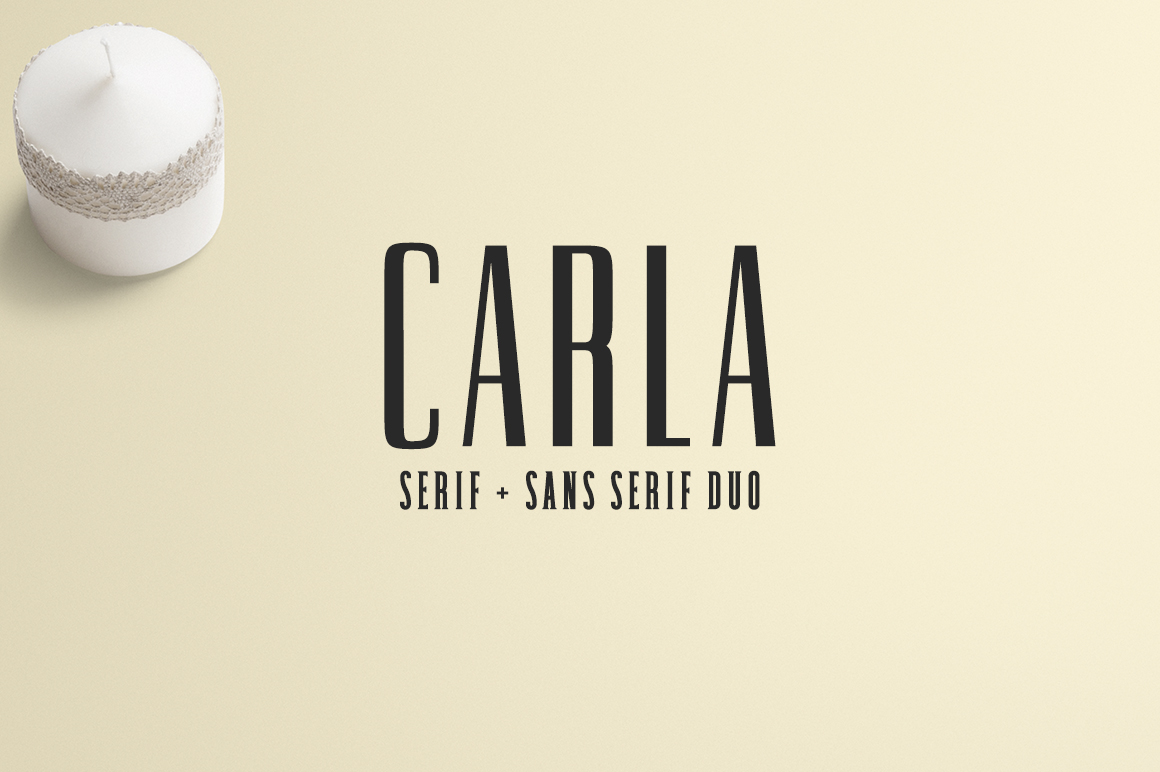
Carla Duo is a typeface pack that includes multiple weights and styles of both a serif and a sans serif. Carla, the serif half, carries a classic, refined silhouette ideal for headlines, titles, or any element that needs to command attention without shouting. Dalena, the sans serif counterpart, provides clean, readable body text that complements Carla’s curves without competing. Together they form a system that can be deployed across websites, print materials, social media graphics, presentations, and branding collateral.
In a typical design process, font selection happens during the planning stage—before you commit to layouts or color palettes. By having a ready‑to‑use duo, you eliminate the trial‑and‑error phase of pairing serifs and sans serifs. You can spend that saved time on hierarchy, spacing, and usability testing instead. For teams working under deadlines, this kind of efficiency directly translates into faster turnarounds and more consistent results.
Before a Project: Preparation and Compatibility Checks
Integrating any new font set into your workflow begins with understanding its format, licensing, and compatibility with your tools. Carla Duo is typically available in common formats such as OTF, TTF, and WOFF, which means it works with most design applications (Adobe Creative Suite, Figma, Sketch, Canva) and web platforms (WordPress, Webflow, custom CSS). Before starting a project, take these steps:
- Test the fonts in your primary design software. Load the complete set—all weights and italics—to verify that the family displays correctly. Check for any missing glyphs or kerning issues, especially if you work with special characters.
- Review the licensing terms. If the project is commercial, ensure the license covers usage for web embedding, print runs, or digital products. Knowing this upfront avoids legal friction later.
- Compare with your brand guidelines. If you’re working within an existing brand, run a quick readability test: set a few paragraphs in Dalena and headlines in Carla at the intended sizes. Adjust weight selections based on the brand’s personality—light weights for a minimalist look, bold for stronger contrast.
One practical advantage of a pre‑paired duo is that you don’t need to worry about x‑height or stroke width mismatches. Carla and Dalena were designed to align visually, so you can skip the tedious calibration step. Still, always preview the fonts with your actual content—especially if the text contains numbers, acronyms, or foreign characters—to catch any surprises before the design moves into production.
During a Project: Practical Implementation in Workflows
Once the fonts are installed and licensed, the real work begins. How you apply Carla Duo depends on the medium and the message. Below are three common workflow scenarios, each illustrating how the duo supports efficient execution.
1. Website or Landing Page
For a business website, use Carla for headings (H1–H3) to inject personality and authority, and Dalena for body text, navigation links, and button labels. The sans serif maintains readability on screens, especially at smaller sizes. Set a bold weight of Carla for the main headline, a regular weight for subheadings, and keep Dalena at 400 or 500 for paragraphs. This creates a clear visual hierarchy without relying on extra decorative elements.
If you’re implementing via CSS, define the font stack like this:
h1, h2, h3 { font-family: 'Carla', Georgia, serif; }
body, p, li { font-family: 'Dalena', Arial, sans-serif; }
Test the combination on mobile first: ensure line lengths don’t exceed 60–70 characters and that the serif headlines still look crisp at reduced sizes. Adjust font‑size and letter‑spacing as needed to maintain legibility.
2. Print Materials (Brochures, Reports, Flyers)
In print, the tactile quality of Carla’s serifs can add a sense of quality to a report cover or a brochure headline. Use the medium weight of Carla for section titles and the regular weight of Dalena for body copy. For pull quotes or callout boxes, a bold italic of Carla works well. Because print often uses larger point sizes, you can also experiment with the light weight of Dalena for captions or footnotes.
When setting up an InDesign or Affinity Publisher document, create paragraph styles for each element: “Carla H1”, “Dalena Body”, etc. This not only speeds up formatting but also makes global changes easier if the client requests a different weight later.
3. Social Media Graphics and Presentations
For slides or social posts, you have limited space to communicate a message. Carla Duo’s versatility shines here: use a bold weight of Carla for the headline (e.g., a quote or key statistic) and the regular weight of Dalena for supporting text. Because both fonts share similar proportions, the layout remains balanced even when you mix them at different sizes. For quick templates, define master slides in PowerPoint or Keynote that pre‑load the pair, so every new slide stays on‑brand.
Interacting with Other Tools, Assets, and Decisions
No font works in isolation. Carla Duo interacts with the rest of your design toolkit in predictable ways that can simplify decision‑making.
- Color and imagery: The font’s neutral, modern tone pairs well with warm earth tones (browns, creams, muted greens) and minimal photography. For high‑contrast designs, pair a dark weight of Carla with a light background; for softer looks, use the thin weights over pastel gradients.
- Other typefaces: If you need a third typeface (for data, code, or secondary accents), choose a monospace or a distinct display font that clearly differs from both Carla and Dalena. Avoid adding another serif that could compete with Carla.
- Design systems: If you maintain a component library in Figma or Sketch, import the font duo and create text styles mapped to your components. This ensures that any instance of “Heading Primary” automatically uses Carla Bold, while “Body” uses Dalena Regular. Consistency across prototypes and final files becomes effortless.
- Decision framework: When unsure which weight to use, start with the thinnest weight of the serif for elegance and the medium weight of the sans for readability. You can always bolden later. This rule of thumb keeps the process moving without over‑analysing.
After a Project: Organization, Quality Control, and Long‑Term Use
A font pack like Carla Duo isn’t a one‑time asset—it’s something you can reuse across multiple projects, saving you the cost and effort of re‑evaluating pairings each time. To make that reuse practical:
- Store the font files centrally. Use a cloud‑based font manager (like Extensis Suitcase Fusion or FontBase) or simply keep the OTF/TTF files in a shared drive with clear folder names (e.g., “CarlaDuo_v2”). Ensure everyone on the team has read access.
- Document the pairing rationale. Write a brief note (one or two paragraphs) explaining why you chose Carla for headings and Dalena for body text, including recommended sizes and use cases. Attach this to your brand guidelines or project handoff document. It saves future collaborators from guessing.
- Run a quality check before final export. Zoom in to check for any rendering issues—especially at small sizes on screens. Verify that the font subset you embed for web (if using WOFF) includes all necessary characters. Print a test page if the project goes to offset printing.
- Plan for version updates. Font foundries occasionally release updates (bug fixes, extended language support). Set a reminder every six months to check if a newer version of Carla Duo is available. If you update, re‑test the fonts in your most active templates.
Real‑World Use Cases Across Different Roles
The value of Carla Duo shows up differently depending on your workflow. Consider these examples:
- A freelancer designing a logo + website: Use Carla’s bold weight as the logotype wordmark and Dalena throughout the website body. The duo ensures visual continuity from the mark to the digital experience.
- A blogger building a brand: Pair Carla for post titles and Dalena for article text. The serif adds a touch of sophistication, while the sans keeps reading comfortable on mobile devices. Create a simple template in WordPress using the included CSS.
- An educator creating handouts and slide decks: Set module titles in Carla medium, body content in Dalena. The consistent pairing helps students quickly identify structural hierarchy across materials.
- A small‑business owner preparing a pitch deck: Use Carla for the company name and key numbers, Dalena for bullet points and descriptions. Investors see a polished, professional presentation without you spending hours tweaking font combinations.
Efficiency and Consistency: Making the Duo a Habit
To truly integrate Carla Duo into your routine, treat it as your default serif‑sans pair for everyday projects. Create shortcuts: in your design software, save a document template that already uses the duo. In your CMS, define a custom stylesheet block that imports the fonts automatically. Over time, the mental overhead of font selection disappears, and you can focus on the actual content and layout.
One common mistake is using too many weights in the same layout. Stick to two weights per style (e.g., Carla bold + Carla regular; Dalena regular + Dalena light). More than four distinct weights in a single project can dilute the visual hierarchy. Trust the pair’s built‑in contrast rather than forcing extra variation.
Moving Forward with Carla Duo
Carla Duo—Carla and Dalena—offers a practical, elegant solution for anyone who needs a reliable serif‑sans pairing without the guesswork. By incorporating it into your preparation, implementation, and maintenance routines, you save time, improve consistency, and deliver a more polished result across web, print, and screen. Download the font pack today and start building projects that feel both refined and modern from the first draft. Your workflow—and your audience—will notice the difference.