Balalak: A Hand-Brushed Font for Distinctive Display Design
When selecting a typeface for a project, the balance between legibility and visual character often determines the final choice. Balalak enters this space as a hand-brushed sans serif font that aims to deliver both. Its appearance immediately conveys a crafted, human touch while maintaining enough clarity for headlines, banners, and other display settings. Understanding what sets Balalak apart, how it compares with similar font styles, and where it fits best can help you decide whether it suits your next design task.
What Makes Balalak Distinct?
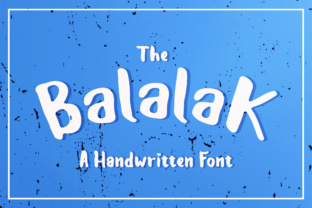
Balalak is a hand-brushed font, meaning each letterform is built from brush strokes rather than uniform geometric shapes. This gives the typeface an organic rhythm—slight variations in stroke width, angle, and spacing that a purely digital font might lack. The sans serif foundation ensures that even with this handcrafted feel, the characters remain relatively clean and readable. Balalak is not intended for dense body copy; its strength lies in medium to large sizes where the brush texture and letter shapes can be appreciated.
One of the distinctive qualities of Balalak is its balance between spontaneity and structure. While the strokes appear freehand, the overall letter proportions stay consistent enough to form a cohesive set. This makes it suitable for situations where you want a humanistic, energetic look without sacrificing clarity. The font includes uppercase and lowercase characters, numerals, and basic punctuation, providing enough versatility for single-line displays, short phrases, and striking headings.
Comparing Balalak with Other Font Categories
To evaluate Balalak effectively, it helps to consider the broader landscape of display fonts. Hand-brushed fonts occupy a middle ground between completely script-based typefaces and rigid sans serifs. Here are a few categories you might compare:
- Geometric sans serifs (e.g., Helvetica, Futura) — clean and uniform, but lack personality. Balalak offers more warmth and visual interest for contexts where a friendly or creative tone is needed.
- Formal scripts — elegant and flowing, but often less legible at smaller sizes and may feel too ornate for modern layouts. Balalak remains more straightforward while still retaining a crafted feel.
- Rough brush fonts — some brush fonts lean heavily into irregular strokes and splatters, pushing readability toward the edge. Balalak tempers that roughness with legible shapes, making it a viable option when you need brush texture without extreme distortion.
Compared to many free or casual hand-brushed fonts, Balalak shows careful attention to consistency. Each letter is recognisable even when the brush effect is pronounced. This reliability can save time in projects where you might otherwise need to adjust spacing or redraw characters manually.
Strengths
- Visual engagement: The hand-brushed style naturally draws the eye, making Balalak effective for grabbing attention in posters, social media graphics, or event banners.
- Legibility in display sizes: Despite its organic origins, the sans serif structure keeps characters readable from moderate distances or on screens.
- Versatile tone: Balalak can appear casual, artistic, or even rugged depending on context. It pairs well with simple backgrounds or with other neutral typefaces.
- Easy to pair: Because Balalak is not overly decorative, it complements many serif or sans serif body fonts without clashing.
Tradeoffs and Limitations
- Not suited for body text: At smaller sizes (below 18–20 points), the brush details may blur and reduce legibility. Balalak is strictly a display font.
- Limited character set: If your project requires extended characters, ligatures, or multiple language support, Balalak may fall short. Check that the font covers your needed glyphs.
- Style may not fit all brands: The hand-brushed look implies a certain personality—informal, creative, perhaps handmade. For corporate, highly formal, or minimalist brands, a cleaner sans serif might be more appropriate.
- Potential for overuse: Like any distinctive font, Balalak works best as an accent. Using it for too many elements on one page can dilute its impact and create visual noise.
When Balalak Is the Right Choice
Balalak shines in projects where a human touch matters. Consider these scenarios:
- Headlines for blog posts or magazine spreads — especially for content about art, travel, food, lifestyle, or creative topics. The font’s character reinforces the theme.
- Posters and flyers — for events like festivals, workshops, or markets, Balalak conveys approachability and energy.
- Social media graphics — short quotes, announcements, or inspirational text benefit from the font’s engaging texture.
- Product labels or packaging — for artisanal or small-batch products, Balalak suggests craftsmanship.
- Logos and branding — if the brand identity leans toward handmade, organic, or creative, this font can be a core visual element. Pair it with a clean supporting typeface for balance.
In these contexts, Balalak helps the design feel more personal than a generic sans serif, yet it remains more versatile than a highly embellished script.
When You Might Need an Alternative
Despite its appeal, Balalak is not suitable for every design situation. Here are cases where another font might serve better:
- Reading-heavy interfaces — websites, apps, or documents that rely on paragraphs of text require a typeface optimised for small sizes and long reading. Balalak would hinder readability.
- Ultra-professional or conservative industries — legal, finance, medical, or government communications usually demand neutral, trustworthy typography. Balalak’s informal style could undermine credibility.
- Projects requiring high versatility — if you need a single font family that includes multiple weights, italics, and ligatures, Balalak’s limited range may not suffice. A more comprehensive typeface might be a better investment.
- When a specific mood demands extreme precision — for example, a minimalist poster that relies on perfect geometric alignment would be disrupted by the organic variations of Balalak.
In those cases, consider a reliable neutral sans serif or a more controlled display font. Always test Balalak in your mockups to see if its personality aligns with the intended tone.
Practical Considerations When Downloading Balalak
If you decide that Balalak fits your project, the download process is straightforward. You can obtain Balalak as a hand-brushed font file from various font marketplaces or directly from the creator’s site. Before downloading, verify the licensing terms: is it free for personal use, or do you need a commercial license? Some hand-brushed fonts come with restrictions on number of users or projects. Also check the available formats (OTF, TTF, WOFF) to ensure compatibility with your design software or web platform.
After obtaining Balalak, test it at different sizes and on different backgrounds. Pair it with a simple sans serif like Open Sans or Lato for body text to create a balanced hierarchy. Adjust tracking and line height as needed, because hand-brushed fonts often benefit from a little extra spacing.
Making an Informed Decision
Choosing a font is never just about looks—it affects readability, brand perception, and user experience. Balalak offers a hand-brushed aesthetic that stands out while remaining legible enough for display use. Its distinct character can elevate creative projects, but its limitations mean it is best used intentionally and sparingly.
When evaluating Balalak against other hand-brushed or brush-style fonts, focus on the specific balance of artistry and clarity that matters for your project. Some users may prefer a rougher, more textured brush font for an edgy effect; others may want something softer. Balalak sits in a practical middle zone, making it a strong candidate for many designers who need a brush approach without sacrificing too much readability.
Ultimately, the best way to decide is to see Balalak in action. Download Balalak, a hand-brushed font, today and try it in your next headline, poster, or logo. Compare it side by side with alternatives you are considering. Observe how it interacts with other design elements and whether its tone aligns with your message. With a clear understanding of its strengths and tradeoffs, you can make a confident choice that serves your project well.