Peudada: A Handbrushed Font for Versatile Design Work
Typography choices can define the tone of a project. Whether you are working on branding, packaging, invitations, or digital content, the font you select communicates something before a single word is read. Peudada is a handbrushed script font that brings a crafted, organic feel to design work. It sits at an interesting intersection between classic calligraphy and modern informality, making it a versatile option worth considering when you are evaluating typefaces for your next project.
This article explores what makes Peudada distinct, where it fits best, and how it compares with other approaches to script and hand-lettered typography. The goal is to help you decide whether this font aligns with your needs without leaning on hype or overselling its qualities.
What Is Peudada and What Makes It Distinct?
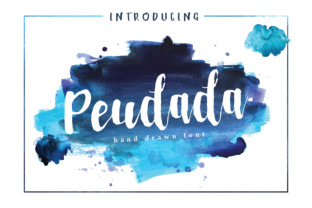
Peudada is a handbrushed script font. That means each character was created with a brush stroke rather than drawn with a pen or constructed digitally from rigid vector paths. The result is a typeface that retains the texture, variation, and subtle imperfections of real brush lettering. Characters have varying stroke widths, natural tails, and a flow that mimics the movement of a hand across paper.
What sets Peudada apart from many script fonts is the balance it strikes between readability and expressive character. Some handbrushed fonts prioritise artistic flair to the point where legibility suffers, especially at smaller sizes. Others lean so far into clean, uniform shapes that they lose the handmade quality entirely. Peudada manages to keep both sides intact. The letterforms are recognisable and easy to read, yet they carry enough irregularity to feel human and unrepeated.
The font includes a full set of uppercase and lowercase characters, numerals, punctuation, and multilingual support. It also typically comes with ligatures and alternates, which allow you to customise the flow of words and avoid the repetitive look that can sometimes plague script fonts. This is especially useful in longer passages where you want the text to feel dynamic rather than mechanical.
Comparing Peudada with Other Script and Handbrushed Options
When you are researching typefaces, it helps to understand how a font like Peudada fits into the broader landscape of script and handlettered fonts. The category is broad, and subtle differences can have a major impact on how a design is perceived.
Handbrushed vs. Handwritten Fonts
Handbrushed fonts, including Peudada, are distinct from handwritten fonts. Handwritten fonts typically mimic the look of pen or pencil on paper. They tend to have finer, more consistent lines and a tighter, more controlled feel. Handbrushed fonts use broader strokes, more dramatic variation between thick and thin lines, and a looser overall rhythm.
If your project calls for something intimate and personal, like a journal excerpt or a friendly note, a handwritten font might be a better fit. If you want something that feels bold, expressive, and slightly more artistic, Peudada offers the brush aesthetic that supports those goals.
Peudada vs. Refined Script Fonts
Refined script fonts, such as those used in formal invitations or luxury branding, are often highly polished. They have precise curves, consistent spacing, and a sense of elegance that comes from digital perfection. Peudada takes a different approach. It embraces the inconsistency of a real brush. This makes it less formal and more approachable.
That tradeoff matters. If you are working on a wedding invitation for a black-tie event, a polished script may be the safer choice. If the invitation is for a rustic outdoor wedding or a creative industry event, Peudada brings warmth and personality that a refined script cannot match.
Peudada vs. Highly Decorative Handbrushed Fonts
Some handbrushed fonts lean heavily into decoration. They have extreme swashes, elaborate flourishes, and dramatic angles. While these fonts can be stunning in small doses, they are often difficult to use in body text or in layouts that require multiple lines of copy. Peudada is comparatively restrained. The characters are decorative enough to stand out but not so ornate that they overwhelm a layout.
This makes Peudada more practical for projects where you need the font to carry a message across several lines or in combination with other visual elements. It works well as a display font for headings and titles, and it can also be used in shorter paragraphs without sacrificing readability.
Strengths of Peudada in Real Projects
Understanding the strengths of any font comes down to seeing where it performs well. Peudada has several characteristics that make it a strong candidate in specific use cases.
Branding and Logo Design
Brands that want to communicate authenticity, craftsmanship, or a human touch often look for typefaces that feel less corporate. Peudada fits that brief well. Its brush texture suggests handmade care, which works for small businesses, artisan products, creative agencies, cafes, and lifestyle brands. The font can be used in a logo on its own or paired with a clean sans-serif for contrast.
One practical consideration is scalability. Because Peudada has good stroke contrast and open letterforms, it remains legible when scaled down for business cards or social media profile pictures. At larger sizes, the brush texture becomes more visible and adds depth.
Packaging and Product Labels
Packaging design often relies on typography to convey the personality of a product. Peudada suits products that are positioned as natural, organic, handmade, or small-batch. Think of craft beer labels, artisanal chocolate packaging, skincare products, or gourmet food items. The font adds a tactile quality that aligns with the physicality of packaging.
It also works well when layered over textured backgrounds, like kraft paper or subtle patterns, because the brush strokes feel native to those surfaces rather than imposed on them.
Invitations and Event Materials
For events that are not strictly formal, Peudada provides a polished but personal feel. Birthday parties, engagement celebrations, baby showers, gallery openings, and creative workshops all benefit from a font that feels both designed and human. The availability of ligatures and alternates helps you customise the wording so that repeated words do not look identical across different materials.
Digital Content and Social Media
On digital platforms, handbrushed fonts can be tricky. Some lose their texture at low screen resolutions or appear too busy on small displays. Peudada holds up relatively well because the letter shapes are clear and the brush effect is not overly complex. It works for Instagram quotes, blog post titles, YouTube thumbnails, and website hero sections. Pairing it with a simple sans-serif body font keeps the overall design balanced.
Limitations and Tradeoffs to Consider
No font is perfect for every situation. Peudada has limitations that you should weigh against your specific project needs.
Not Ideal for Long Body Text
Like most handbrushed and script fonts, Peudada is not designed for extended reading. Long paragraphs set in this font will tire the eye, and the decorative qualities can become distracting. If you need to present large amounts of text, reserve Peudada for headings, short callouts, or accent phrases. Use a readable sans-serif or serif font for the body copy.
Formality Ceiling
While Peudada is versatile, it does not reach the level of formality that some projects require. Corporate annual reports, legal documents, academic publications, and ultra-luxury branding typically need more neutral or refined typefaces. If the tone needs to be serious, reserved, or authoritative, Peudada may feel too casual.
Pairing Requires Care
Handbrushed fonts demand thoughtful pairing. Because Peudada carries so much visual character, it needs a complementary font that does not compete. Clean, minimalist fonts work best. A simple sans-serif like Open Sans, Lato, or Montserrat often pairs well. The goal is contrast without conflict. If you pair Peudada with another decorative font, the design can quickly become chaotic.
File Size and Performance
If you are using Peudada on a website, consider that handbrushed fonts with multiple alternates and ligatures can result in larger font file sizes. This may affect page load times, especially on mobile connections. Optimise by subsetting the font to include only the characters you need, or use the font primarily in images rather than live text if performance is a concern.
When Peudada Is the Right Choice
You might lean toward Peudada when your project needs warmth, personality, and a sense of human involvement. It is a strong choice when:
- Your brand or project is centred on craftsmanship, artisanal quality, or creative expression.
- You want a handbrushed look but still need good legibility at various sizes.
- You are working on short-form or medium-form content where the font can be the visual hero.
- You value the ability to customise the text with alternates and ligatures for a tailored appearance.
- The audience you are addressing values authenticity over polish.
If those conditions describe your situation, Peudada deserves a spot on your shortlist. It offers a level of refinement that many handbrushed fonts lack, while retaining the organic qualities that make brush lettering appealing.
When You May Need an Alternative
There are also clear situations where Peudada is not the best fit. Consider other options if:
- Your project requires extreme formality or a traditional, elegant script.
- You need to set long passages of text that will be read continuously.
- Your design calls for a neutral, invisible typeface that does not draw attention to itself.
- You are working in a very small size where the brush texture could become muddied.
- Digital performance constraints make larger font files problematic.
In these cases, look toward simpler sans-serif fonts, refined scripts, or neutral serifs that prioritise readability and consistency over expressiveness.
Practical Evaluation Tips for Choosing Peudada
If you are still comparing Peudada with other fonts, here are a few practical steps that can help you decide.
First, test the font in context. Download the trial version if available and set your actual copy in the layout you are designing. A font that looks beautiful in a specimen sheet may behave differently when applied to your specific words and design elements.
Second, test at multiple sizes. See how Peudada reads at 14 pixels for a social media post, at 36 points for a heading, and at 72 points for a logo. Pay attention to how the brush strokes scale and whether any characters become difficult to distinguish.
Third, pair it with at least two different complementary fonts. Try a clean sans-serif and a simple serif. See which combination feels most cohesive for your project. The right pairing can elevate Peudada, while the wrong one can undermine it.
Fourth, consider your audience. Show a draft to a few people who represent your target audience and ask for their impressions. Do they read the text as warm and approachable? Does it feel appropriate for the context? Feedback from real viewers is often more revealing than your own assumptions.
Finally, think about long-term use. If you are selecting a font for a brand or a recurring project, make sure Peudada will still feel right a year from now. Trends in typography shift, but a font that aligns with the core identity of a project tends to age well.
Making Your Decision
Peudada is a thoughtfully crafted handbrushed font that fills a specific niche well. It brings a tactile, human quality to design work while maintaining a level of readability that is often missing in more expressive brush fonts. Its versatility across print and digital applications, combined with the flexibility of ligatures and alternates, makes it a practical option for a range of projects.
At the same time, it is not a universal solution. Its casual, artistic character limits its use in formal or text-heavy contexts. The key to making the right choice is understanding the demands of your specific project and matching them with the font's strengths.
If you need a font that feels personal without being sloppy, expressive without being unreadable, and crafted without being precious, Peudada is worth evaluating seriously. Compare it with other handbrushed and script options, test it in your actual design environment, and decide based on how well it serves your content and your audience. That approach will lead you to a choice that supports your work rather than complicating it.