Sweetpaint: A Loose, Painted Display Font with Bold Brushstrokes
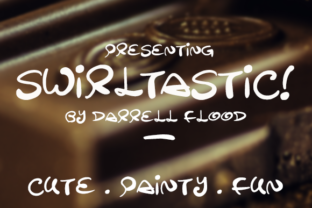
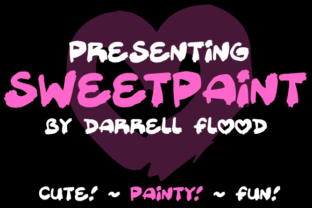
When evaluating display typefaces for projects that call for a human, tactile quality, few options deliver the raw expressiveness of a well-crafted painted font. Sweetpaint, created by Darrell Flood, offers exactly that: a loose, painted font built from looping brushstrokes that are thick and bold enough to command attention at display sizes. It is not another clean, vector-perfect sans serif. It is rough, uneven, and deliberately imperfect — and that is precisely its value.
This article examines what Sweetpaint is, how it performs in real-world use, who stands to benefit most from it, and where its limitations may arise. The goal is to provide an honest, practical evaluation so you can determine whether it fits your workflow, audience, and project needs.
What Sweetpaint Offers: Core Characteristics
Sweetpaint belongs to the category of hand-painted display typefaces. Unlike script fonts that rely on smooth, digital bezier curves, this font simulates the look of paint applied with a broad brush. Each character carries visible texture, inconsistent stroke weight, and the kind of organic variation that comes from a physical painting tool rather than a digital pen.
The looping brushstrokes are central to its personality. Ascenders and descenders often curl back on themselves, creating small loops that give the letterforms a playful, unpolished feel. Despite this looseness, the strokes remain thick and bold, ensuring legibility at larger sizes. The font does not aim for subtlety. It aims for presence.
Key characteristics worth noting include:
- Thick, bold strokes that hold up well at headline and poster sizes
- Organic texture that mimics actual paint application on rough surfaces
- Looped brushstrokes that add a casual, hand-lettered quality
- Variable stroke weight within individual characters, reinforcing the handmade aesthetic
- A loose, uneven baseline that avoids the rigidity of mechanical typesetting
These features make Sweetpaint decidedly non-utilitarian for body text. This is a display font first and foremost, and it works best when given room to breathe at larger point sizes.
Strengths and Practical Value in Real-World Use
The primary strength of Sweetpaint lies in its ability to convey emotion and informality quickly. In design contexts where a friendly, approachable, or even slightly messy tone is appropriate, this font delivers that message without requiring additional styling or distressed effects. The brushstroke texture is baked into the letterforms themselves, not added as a post-processed layer.
For designers working on packaging for artisanal or handmade products, Sweetpaint can serve as a reliable choice. A small-batch jam label, a craft beer can, or a handmade soap package all benefit from type that does not look factory-produced. The font suggests human involvement, which aligns well with brands that want to emphasize craftsmanship over mass production.
Similarly, event posters, flyers, and social media graphics for casual or creative occasions can use Sweetpaint to set an informal mood. A gallery opening, a workshop, a music festival, or a pop-up market all offer natural contexts where this typeface fits. The looping brushstrokes add a sense of motion and spontaneity that static sans serif fonts cannot replicate.
One area where Sweetpaint performs particularly well is in short, expressive text. A single word or a short phrase set in this font carries more emotional weight than the same phrase in a neutral typeface. Words like “love,” “hello,” “fresh,” or “handmade” take on a warmer, more personal character.
Who Benefits Most from Sweetpaint
Given its characteristics, Sweetpaint is not a font for every designer or every project. However, several specific groups are likely to find it genuinely useful.
Small Business Owners and Entrepreneurs
If you run a business that relies on visual branding to communicate authenticity, Sweetpaint can be a cost-effective asset. Instead of commissioning custom hand-lettering for every label, sign, or social post, you can set type yourself and retain a consistent handmade look across materials. Bakeries, coffee shops, florists, and artisanal food producers are among the businesses that could integrate this font into their visual identity without it feeling forced.
Freelance Designers and Creatives
For designers who work with multiple clients across different industries, having a painted display font in your library broadens your stylistic range. Sweetpaint can fill a specific niche: projects where the client requests something “handmade,” “rustic,” or “organic.” It saves time compared to creating custom brush lettering from scratch, especially when the budget does not allow for that level of bespoke work.
Marketers and Content Creators
Social media content, email headers, and landing page titles all benefit from type that stops the scroll. Sweetpaint’s bold, textured strokes grab attention quickly, making it a viable option for marketers who need to differentiate their visuals in crowded feeds. It works particularly well when paired with neutral, minimal backgrounds that let the letterforms stand out.
Educators and Hobbyists
For anyone teaching or learning about typography, Sweetpaint provides a clear example of how a display font can communicate tone and mood. It is also approachable for hobbyists who are exploring design tools and want to experiment with expressive type without investing in expensive custom lettering services.
Quality, Usability, and Technical Considerations
From a technical standpoint, Sweetpaint performs reliably across standard design applications. The font installs like any other OpenType or TrueType file and works in major design software, including Adobe Creative Suite, Affinity products, and web-based tools like Canva or Figma, provided font upload is supported.
The glyph set covers standard uppercase and lowercase letters, numerals, and basic punctuation. For most display applications, this range is sufficient. However, if your project requires extensive multilingual support, stylistic alternates, or ligatures, you may find the character set limited. Sweetpaint is not a sprawling typeface family. It is a focused, single-style font designed for specific use cases.
Consistency across characters is deliberately uneven, which is true to the hand-painted premise. Some letters may appear heavier or lighter than others, and the baseline can shift slightly between characters. This is not a flaw. It is an intentional design choice that reinforces the font’s handmade character. But it does mean that Sweetpaint requires thoughtful typesetting. For instance, setting it at very small sizes or in long passages may result in readability issues because the uneven strokes and loops become harder to parse.
Kerning in a font like Sweetpaint is inherently less predictable than in a geometric sans serif. The looping ascenders and descenders can sometimes collide or create awkward spacing, especially when certain letter combinations appear together. Manual kerning adjustments in your design software are advisable for any setting where the text will be prominently displayed.
For web use, the font’s bold strokes translate well to headings and hero text, but loading it as a webfont should be tested across devices and browsers. The textured quality that looks excellent on a desktop screen at 72 pixels may appear less crisp on lower-resolution mobile displays. Offering the font at a range of sizes and testing it in context is recommended before committing to it in a production website.
Potential Limitations to Consider
No font is universally applicable, and Sweetpaint has constraints worth acknowledging openly.
- Limited suitability for body text: The thick strokes and loose baseline make it impractical for paragraphs or small type. Use it only for headings, short phrases, or single words.
- Not ideal for formal or corporate contexts: The casual, messy aesthetic clashes with conservative branding. A law firm, financial institution, or medical practice would find this font inappropriate for most applications.
- Requires careful typesetting: As noted, manual kerning and spacing adjustments are often necessary. This adds time to the design process.
- May not suit all audiences: While many people respond positively to handmade typography, some viewers may perceive it as unprofessional or too casual, depending on the context.
- Limited character set: If your projects demand extended Latin characters, diacritics, or specialized symbols, Sweetpaint may not cover them.
Being aware of these limitations helps you deploy the font where it will succeed rather than forcing it into roles it cannot fill.
Practical Recommendations for Getting the Most Out of Sweetpaint
To use Sweetpaint effectively, a few practical approaches can make a meaningful difference in your results.
First, pair it with a clean, neutral sans serif or serif for supporting text. The contrast between Sweetpaint’s rough brushstrokes and a refined body typeface creates visual hierarchy and keeps the overall design balanced. A font like Open Sans, Lato, or even a simple geometric sans serif works well as a companion.
Second, allow generous spacing around the type. Sweetpaint demands breathing room. Crowding it with other visual elements undermines its impact. Use negative space strategically to let the letterforms speak.
Third, test it at various sizes before finalizing a design. Sweetpaint may look dramatically different at 36 points versus 72 points or 120 points. The texture becomes more pronounced at larger sizes, while smaller sizes may cause the loops and stroke variations to feel muddy.
Fourth, consider color choices carefully. Because the font already carries visual texture, it does not need elaborate color treatments. Solid, flat colors often work best. Busy backgrounds or complex gradients compete with the letterforms and reduce readability.
Finally, use it sparingly. Sweetpaint works best as an accent typeface. A headline here, a short quote there. Overusing it across an entire design can dilute its impact and make the project feel one-note.
Long-Term Value and Durability
Trends in typography shift over time, but the appeal of handmade, painted lettering has proven remarkably persistent. Sweetpaint is not chasing a fleeting aesthetic. It draws on a visual language that has been used for signage, packaging, and print work for decades. Its value lies in its ability to evoke human touch in an increasingly digital visual landscape.
For designers and business owners who build their visual identity around authenticity and approachability, Sweetpaint can serve as a reliable component of a broader typographic toolkit. It is not a font that will solve every design problem, but it is a font that solves a specific set of problems well.
The long-term value depends on how thoughtfully it is deployed. If you use it only when the context genuinely calls for a painted, casual, handmade look, it will continue to serve your projects effectively. If you force it into unrelated contexts, its novelty will wear thin quickly.
Darrell Flood has created a font that understands its own purpose. Sweetpaint does not pretend to be versatile in the way a sprawling typeface family does. Instead, it commits to a single, clearly defined aesthetic and executes it with consistency. That clarity is ultimately what makes it worth considering for your next project that needs a bold, painted voice.
Whether you are designing packaging for a small business, creating social media graphics for a creative campaign, or building a visual identity that prioritizes human warmth over digital precision, Sweetpaint offers a practical, expressive option. Evaluate it against your specific needs, test it in context, and decide whether its strengths align with the message you want to communicate.