Little Star: A Practical Look at a Hand Drawn Font for Designers
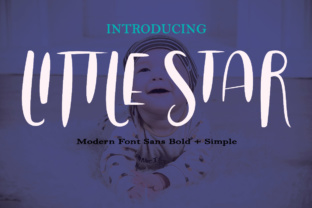
When evaluating typefaces for a project, the balance between aesthetic appeal and functional utility is often the deciding factor. A font that looks charming in isolation may falter in a real-world layout. Little Star, described as a sweet and simple hand drawn font with bold and curvy characters, enters this equation with a clear promise: to add personality without sacrificing readability. For professionals across marketing, publishing, and small business management, understanding the practical applications of this font is essential before integrating it into a workflow.
What Defines the Design and Quality of Little Star?
At its core, Little Star is a display typeface that draws its character from deliberate handcraftsmanship. The bold, curvy letterforms are its most defining feature. This is not a font trying to mimic pristine digital precision; instead, it embraces the slight irregularities that make hand-drawn typography feel personal and approachable. The curve of the 'a', the loop of the 'e', and the stem of the 'd' all carry a rounded softness that contributes to an overall perception of warmth.
From a technical quality perspective, Little Star displays a high level of consistency. While it is hand drawn, the spacing and kerning have been carefully tuned to ensure that words remain coherent. This attention to detail prevents the font from feeling amateurish or chaotic. For professionals who have experimented with other hand-lettered fonts, this reliability is a notable strength. The bold weight ensures that the text remains legible even when reduced in size for subheadings or short labels, though its primary strength lies in titles and headers where the bold strokes can command attention.
The design successfully walks the line between being on trend and sweetly classic. It avoids hyper-stylized flourishes that could quickly date a project. For a blogger or small business owner, this means a logo or banner created today is likely to retain its charm for years to come without looking tied to a specific trend cycle.
Key Strengths and Real-World Utility
Little Star offers several tangible benefits for creative and professional applications. Its strength is not just in how it looks, but in how it functions across different media.
1. Branding for Small Businesses and Entrepreneurs
For a local bakery, a children's bookstore, or a lifestyle coach, branding must communicate core values quickly. Little Star excels in this space. Its approachable aesthetic directly conveys trust, simplicity, and care. Using this font for a logo or store signage can instantly set a warm, inviting tone that resonates with customers seeking personalized service. The consistency it provides across different pieces of collateral strengthens brand recognition.
2. Digital Content and Social Media
Marketers and content creators often struggle to find fonts that are both readable on mobile devices and visually distinct. The bold, curvy nature of Little Star makes it highly effective for Instagram stories, quote cards, and Pinterest graphics. It maintains clarity on small screens while adding a tactile, human element that stands out against standard sans-serif or script fonts.
3. Educational and Publishing Materials
For educators and publishers creating materials for young audiences or community newsletters, the font's readability and friendly character are significant assets. It can be used effectively for:
- Worksheets and activity books: Headers that guide children without feeling overly formal or intimidating.
- Classroom decor: Posters and labels that benefit from a hand-crafted feel.
- E-book covers: Titles that need to convey a gentle, inviting narrative.
Who Should Consider Adding Little Star to Their Library?
Identifying the right audience for a tool is key to maximizing its value. Little Star is not a one-size-fits-all solution, but it is a highly effective specialist.
- Freelance Graphic Designers: Keeping a curated collection of hand-drawn fonts is crucial for client work. Little Star provides a dependable, high-quality option for projects requiring a custom, hand-lettered feel without the billable hours of manual lettering.
- Marketing Managers: For brands with a playful or nurturing voice, this font can be a consistent element across campaigns, newsletters, and landing pages. It allows for rapid content creation without sacrificing visual quality.
- Bloggers and Content Creators: A cohesive visual identity is vital for audience retention. Little Star offers a distinctive look for headers and titles that helps a blog stand out from the crowd.
- Small Business Owners (DIY Marketers): For entrepreneurs wearing multiple hats, an easy-to-use, reliable font can elevate a DIY flyer or social post from basic to professional without requiring advanced design skills.
Practical Considerations and Limitations
An objective evaluation requires acknowledging where a tool may not be the best fit. Little Star has clear limitations that potential users should consider.
- Not a Body Text Font: This is a display font. Its bold, chunky nature makes it unsuitable for long paragraphs. Attempting to use it for body copy will result in poor readability and layout inefficiency. It requires pairing with a simpler, more neutral font—such as a clean sans-serif or a classic serif—for lengthy reading sections.
- Niche Aesthetic: The "sweet and simple" personality is specific. It will not suit every brand or project. An edgy fashion label, a tech startup, or a corporate law firm will find the tone mismatched. Using it outside its optimal context can undermine the professionalism of the communication.
- Character Set and Compatibility: Depending on the specific version you acquire, it is important to verify the character set covers the necessary special characters, punctuation, and language support for your project. Always test the font in your specific application—whether Adobe Suite, Canva, or a web CMS—before committing to a full project.
- Licensing Terms: Before purchasing a commercial license, checking the terms is critical. Ensure they align with your intended use, whether for client projects, merchandise, or digital products, to avoid future legal or workflow issues.
Evaluating Long-Term Value and Fit
In an environment where design trends evolve rapidly, investing in a font requires considering its longevity. Little Star strikes a balance by avoiding extreme stylistic quirks. Its foundation in simple, curvy, bold forms lends itself to a classic hand-drawn look that has enduring appeal. For professionals who regularly work on projects requiring a human, friendly touch, it represents a reliable asset.
When compared to commissioning custom hand lettering for every project, a well-crafted font like Little Star offers significant time and cost savings. The consistency it provides across different pieces of collateral strengthens brand recognition. For a small business owner, the ability to generate cohesive marketing materials internally, without needing a designer for every single postcard or social graphic, is a substantial practical benefit.
To maximize its effectiveness, users should follow a few best practices. Pairing Little Star with a neutral body font—such as Open Sans, Lato, or a classic Garamond for a more editorial feel—creates a strong typographic hierarchy. Using it sparingly on a page—for the main headline or a single highlighted word—amplifies its impact. Overusing it dilutes its charm and can negatively affect readability.
Consider a realistic example: a freelance creative launching a client's workshop for creative writing. Using Little Star for the workshop title on the landing page, promotional emails, and PDF flyer instantly communicates a nurturing, creative environment. Paired with a clean, readable body font, the materials are both attractive and functional.
In contrast, for a financial planner aiming to project stability and technical expertise, Little Star would likely be a poor choice. The mismatch between the font's persona and the brand's required tone could create confusion. This reinforces the importance of context in font selection.
Final Observations on Little Star
Little Star fulfills its intended purpose effectively. It is a well-executed hand drawn font that delivers on its promise of adding sweet, bold personality to design projects. Its practical value is highest for professionals in creative fields, small business owners, and marketers who need to communicate warmth, approachability, and hand-crafted care.
The decision to adopt Little Star should be based on a clear understanding of its strengths and limitations. For projects aligned with its aesthetic, it is a powerful and efficient tool. It is not a universal workhorse, but a specialized tool designed for a particular expressive range. When applied thoughtfully, it functions as a reliable asset that saves time and enhances communication. For the professional or entrepreneur who regularly needs to inject a dose of warmth into their work, Little Star presents a compelling and practical option worth serious consideration.