Evaluating NaPeyda: A Practical Guide to the Hollow Distorted Latin Font
When selecting a typeface for a design project, the choice often comes down to balancing readability with visual impact. Among the many experimental fonts available, NaPeyda stands out as a hollow distorted Latin font that offers a distinct textural quality. Unlike standard typefaces that prioritize clarity above all else, NaPeyda introduces an abstract element that can reshape how a viewer interacts with text. This article provides a balanced evaluation of NaPeyda, exploring its strengths, limitations, and practical fit for different design scenarios. Whether you are considering it for branding, editorial work, or conceptual art, understanding what this font delivers—and where it falls short—will help you make an informed decision.
What Is NaPeyda?
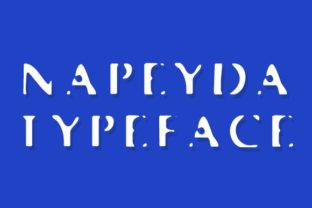
NaPeyda is a display typeface characterized by its hollow, distorted letterforms. Each glyph appears as if it has been stretched, warped, or partially eroded, creating an irregular outline that breaks away from traditional typographic structure. The "hollow" quality refers to the open, negative-space interiors of the characters, while the "distortion" manifests in uneven curves, asymmetrical proportions, and intentional inconsistencies across the alphabet. This is not a font designed for extended body text; rather, it belongs to the category of decorative or experimental typefaces intended for short, impactful applications.
The Latin character set includes uppercase and lowercase letters, numerals, and basic punctuation, though the distorted nature means that some glyphs may read differently at smaller sizes. The overall aesthetic is raw, unfinished in a deliberate sense, and visually noisy. For designers looking to introduce texture, irregularity, or a sense of decay into their work, NaPeyda provides a ready-made solution that would be difficult to replicate through manual distortion alone.
Why Designers Consider NaPeyda
Interest in NaPeyda typically arises from a need to break away from clean, predictable typography. Many projects benefit from a typeface that communicates something beyond the literal meaning of the words—a font that becomes a visual artifact in itself. Here are several scenarios where NaPeyda naturally comes into consideration:
- Branding for edgy or alternative identities – Music festivals, underground clubs, streetwear labels, and avant-garde art spaces often seek typefaces that feel unconventional. NaPeyda's distorted forms can reinforce a brand identity that values imperfection and nonconformity.
- Poster and flyer design – Large-format prints where the typography serves as the primary visual element benefit from NaPeyda's dramatic, textured appearance. The hollow nature allows for layering with background colors or images.
- Album covers and merchandise – Music packaging, especially for experimental or heavy genres, frequently uses distorted type to evoke mood. NaPeyda's hollow forms can be filled with gradients, patterns, or photographs, adding depth.
- Abstract or conceptual art projects – When the goal is to challenge legibility or explore the boundaries of written language, NaPeyda offers a ready-made aesthetic that aligns with deconstructionist themes.
- Digital and social media graphics – Short headlines or quotes overlaid on textured backgrounds can gain immediate visual interest through NaPeyda's irregular shapes.
In each of these cases, the decision to use NaPeyda hinges on whether the project allows for reduced legibility in exchange for heightened visual texture. If the message is brief and the context supports interpretive reading, the tradeoff is often worthwhile.
Benefits and Strengths
NaPeyda's primary advantage is its ability to inject character and atmosphere into a design with minimal effort. Rather than spending hours manually distorting individual letterforms, a designer can set type directly and achieve an organic, distressed look. The hollow structure also opens up creative possibilities for color and layering. By applying a gradient or placing a texture behind the letters, the negative space becomes an active part of the composition. This makes NaPeyda particularly effective for one-color or limited-palette designs where the type itself must carry visual weight.
Another benefit is its memorability. In a landscape where clean sans-serifs dominate, an unusual typeface like NaPeyda can make a piece stand out. For short-form applications such as logos, headlines, or titles, the font's distinctiveness can become a branding asset. When used consistently, it helps create a recognizable visual language that audiences associate with a particular style or attitude.
NaPeyda also performs well at large sizes. The distortion and hollow interiors become more pronounced and intentional when scaled up, allowing details that might be lost at small sizes to shine. For print posters, billboards, or digital banners where the text is the hero, the font delivers a gritty, hand-crafted feel that contrasts sharply with sterile, corporate typography.
Tradeoffs and Limitations
No font is universally applicable, and NaPeyda comes with several tradeoffs that designers should weigh carefully. The most obvious limitation is legibility. Because the letterforms are distorted and hollow, reading extended text becomes tiring, and some characters may be ambiguous. For example, an "e" and a "c" might appear similar under distortion, and lowercase "a" or "g" could be misread. This effectively rules out NaPeyda for body copy, subheadings, or any application where comprehension speed matters.
A second consideration is scalability. While NaPeyda works well at large sizes, its performance at smaller point sizes is inconsistent. At 14 points or below, the hollow interiors tend to fill in or become too delicate to read clearly, especially in print where ink spread can close the gaps. For digital use, anti-aliasing may further soften the already irregular edges, reducing the intended texture. If your project requires the font to be used at multiple sizes, you may need to pair it with a complementary, more legible typeface for smaller text.
There is also the question of context appropriateness. NaPeyda's aesthetic is inherently gritty and raw. For brands or projects that aim for professionalism, luxury, or approachability, this typeface may send the wrong signal. A financial institution, healthcare provider, or children's book would almost certainly be better served by a more neutral or friendly typeface. Using NaPeyda in such contexts could undermine trust or alienate the audience.
When NaPeyda Is a Strong Fit
Based on its characteristics, NaPeyda works best in projects where visual impact takes priority over rapid readability. Concrete examples include:
- Event posters for music festivals, club nights, or art openings where the poster itself is part of the experience.
- Album or EP covers for genres like industrial, noise, hip-hop, or experimental electronic music.
- Branding for streetwear, skate, or tattoo culture where authenticity and edge are core values.
- Opening titles or lower thirds in short films that aim for a lo-fi or dystopian mood.
- Single-word logos or monograms where the font's character becomes the logo itself.
- Zine or small-press publication covers where handmade or DIY aesthetics are intentional.
In these scenarios, the audience expects or even desires a degree of abstraction. The font's distortion adds to the narrative rather than detracting from it. If your goal is to evoke a sense of imperfection, rawness, or urban decay, NaPeyda can deliver that without additional post-processing.
When Alternatives May Be Worth Considering
There are equally valid situations where NaPeyda may not be the best choice, and exploring alternatives can save time and produce better results. Consider other options if:
- You need long-form readability – For articles, website body copy, or any text block exceeding a sentence, a standard serif or sans-serif will serve your audience better. Pair NaPeyda with a clean companion typeface for headlines only.
- Your brand requires versatility – If you need one typeface to work across web, print, signage, and mobile, NaPeyda's unpredictability at small sizes becomes a liability. A more systematic display font with multiple weights may be more practical.
- Your audience skews older or less design-savvy – Legibility expectations vary by demographic. For general consumer audiences unfamiliar with experimental typography, distortion may be perceived as sloppy rather than intentional.
- You need to convey clarity, trust, or safety – Government communications, medical information, and educational materials demand maximum readability. NaPeyda is not suitable for these contexts.
- Your project uses small text sizes – At 10–16 pixels, the hollow strokes become difficult to resolve on screen. Alternative condensed or stencil fonts might achieve a similar texture without sacrificing legibility.
When evaluating alternatives, consider typefaces like Knife, Base 9/12, or Monotype's Dyslexic-friendly fonts depending on your need. For texture without distortion, a distressed or grunge serif may offer a middle ground. For hollow forms with better legibility, stencil fonts or inline sans-serifs provide a cleaner starting point.
Practical Decision-Making Insights
To determine whether NaPeyda aligns with your goals, start by defining the primary function of the text in your project. Ask yourself three questions:
- How much text needs to be read? If the answer is more than a few words, NaPeyda should be reserved for titles only, with a secondary font for the rest.
- What emotional tone are you aiming for? NaPeyda communicates edginess, decay, and abstraction. If your tone is playful, elegant, or calming, look elsewhere.
- At what size will the font appear most frequently? If the average usage is 24 points or larger, NaPeyda's details will shine. If it's smaller, test it thoroughly before committing.
It is also wise to test NaPeyda in your actual medium—print it at full scale, view it on a high-resolution screen, and check it on mobile. Because of its irregular construction, what looks striking on a monitor may become illegible when printed or scaled down. Requesting a sample or using a free trial version can reveal surprises before you invest time in layout.
Another practical step is to pair NaPeyda with a neutral, highly legible typeface. A straightforward sans-serif like Helvetica Now, Inter, or Work Sans can anchor body copy while NaPeyda handles headlines. This combination lets you capture the abstract texture where it matters most without sacrificing usability.
How NaPeyda Compares to Other Distorted Fonts
When evaluating NaPeyda, it helps to understand its place within the broader landscape of distorted typefaces. Compared to fonts like Fatboy Slim's promotional type or Blur's distortion-based lettering, NaPeyda offers a more systematic approach to irregularity—each letter is consistently hollow and warped, rather than randomly distressed. This makes it more repeatable across a project but less organic than hand-drawn alternatives.
Compared to stencil fonts, NaPeyda provides greater visual complexity but less uniformity. Stencil typefaces break letters into disconnected segments for a similar hollow effect, but they do so in a predictable grid. NaPeyda's distortion is less predictable, which adds artistic value but also creates more legibility challenges.
For designers who want a hollow look without the distortion, inline or outline fonts like Bebas Inline or Playfair Display Inline offer a cleaner aesthetic. If distortion is the goal but hollow forms are not, a grunge or scratch font like 27 Days Later may provide more texture. Your choice ultimately depends on which variable—hollowness or distortion—is more important to your concept.
Final Considerations for Your Decision
NaPeyda is a specialized tool. It is not a workhorse typeface, nor does it claim to be. Its value lies in its ability to transform short text into a visual artifact that carries mood, texture, and attitude. For designers working in music, street culture, avant-garde publishing, or experimental branding, NaPeyda can be a powerful addition to the toolkit. For projects that demand clarity, professionalism, or broad audience appeal, it will likely create more friction than value.
Before making a final decision, consider running a simple test: set your primary headline in NaPeyda and show it to three people unfamiliar with the project. Ask them what words they see and what tone they perceive. Their reactions will tell you whether the font enhances or obscures your intended message. If the feedback aligns with your goals, NaPeyda may be the right choice. If not, you have the opportunity to explore alternatives that better serve your audience and your vision.
Ultimately, the best typeface is one that serves both the designer's intent and the viewer's experience. NaPeyda leans heavily toward the former. Use it where its abstraction adds meaning, and pair it with restraint where clarity is essential. With thoughtful application, it can elevate a design from ordinary to memorable without sacrificing the message itself.