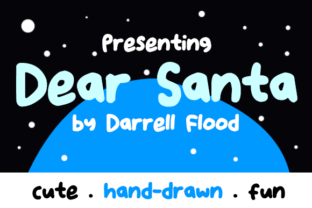
Dear Santa: A Whimsical Font That Balances Charm and Legibility
When you are designing for children—whether it is a classroom handout, a holiday card, or a playful brand identity—the typeface you choose can make or break the connection. You want something that feels genuinely childlike, not just a generic “fun” font. You need warmth, a hand-drawn quality, and above all, readability. That is where Dear Santa, created by Darrell Flood, steps in. This cute, casual hand-drawn font in a child-like fat marker style captures the messy, heartfelt energy of a real letter to the North Pole while remaining clear enough for real-world use. For adults creating content for kids, it is a practical tool that solves a common problem: how to look playful without sacrificing professionalism.
What Makes Dear Santa Different from Other Playful Fonts?
Many decorative fonts lean so heavily into whimsy that they become difficult to read, especially for young children who are still learning to recognize letters. Dear Santa avoids that trap. Its fat marker strokes are bold and well-defined, giving each character a solid presence on the page. The irregular, hand-drawn edges add personality without distorting letter shapes. This means you can use it for short sentences, headings, or even full lines of text without worrying about legibility fatigue.
The font was designed by Darrell Flood, a type designer known for creating approachable, character-driven fonts. With Dear Santa, he captures the specific look of a marker that is slightly too thick for neat writing—the kind of tool a child might grab to dash off a wish list. There is a charming inconsistency in the line weight and letterforms that feels authentic, not artificially distressed. This authenticity is what makes the font work so well for children-oriented designs. It does not look like a grown-up trying to imitate a kid; it looks like the real thing.
Who Needs Dear Santa? Understanding the Core Audience
Adults who work with or for children are the primary beneficiaries of this font. That group is broader than you might think, and each user approaches the topic of font selection with different goals and constraints.
- Teachers and educators need materials that capture attention while remaining easy to decode. Classroom posters, name tags, word walls, and activity sheets all benefit from a font that feels friendly but does not cause squinting. Dear Santa’s thick strokes work especially well for large-print labels and bulletin board headers.
- Children’s book authors and illustrators often look for a typeface that matches the tone of their story. Whether you are self-publishing a picture book or designing an early reader, a font like Dear Santa can unify the visual story. It works beautifully for speech bubbles, chapter titles, or short narrative text that mimics a child’s handwriting.
- Parent and family bloggers want their websites and printable resources to feel warm and personal. A font that looks like it was written with a fat marker can give your free printables, checklists, or holiday cards an immediate emotional connection with your audience.
- Small business owners targeting families—think toy stores, children’s clothing brands, or family-friendly cafes—can use Dear Santa to infuse their branding with a sense of nostalgia and fun. It works well on signage, social media graphics, and packaging.
Practical Applications: Where Dear Santa Shines
Once you understand what Dear Santa is and who can use it, the next step is thinking about where it will have the most impact. The font’s strengths come through in specific contexts that balance its playful nature with its readability.
Holiday and Seasonal Projects
Given the name, it is natural to reach for Dear Santa when creating Christmas-themed content. However, its usefulness does not end in December. The child-like marker style works well for any project that calls for a handmade feel—birthday invitations, summer camp flyers, back-to-school signs, or Valentine’s Day cards. The key is pairing the font with the right supporting elements. For a holiday letter from a classroom elf, let Dear Santa carry the main message. For a summer reading challenge, use it for headings and switch to a simple sans-serif for the body text. This keeps the design balanced and easy to navigate.
Classroom and Learning Materials
One of the most practical uses for Dear Santa is in early childhood education settings. The fat marker style mimics the way children write, which can make instructional materials feel more relatable. You might use it to label bins and cubbies, create a word wall, or design a “letter of the week” poster. Because the font remains legible at moderate sizes, it works for worksheets too—especially for short instructions or prompts where you want to maintain a friendly tone. Just be mindful of spacing: Dear Santa’s characters have a natural bounce, so increasing the letter spacing slightly can improve readability for young readers.
Digital Content for Kids and Families
Social media graphics, YouTube thumbnails, and blog headers all need to grab attention quickly. A font like Dear Santa adds a handmade quality to digital designs that can cut through the polished look of many online visuals. Use it for short headlines, callout text, or quote cards. For example, a parenting blogger creating a “Santa Letter Generator” printable could use Dear Santa both in the preview graphic and on the actual worksheet. This consistency builds trust and reinforces the emotional appeal of the resource.
Branding and Identity Work
If you are building a brand that caters to children or families, your logo and visual identity should feel approachable. Dear Santa can be part of that identity, but it works best when used sparingly. Consider using it as the display font for your brand name or tagline, then pairing it with a clean, neutral font for other text. This creates a contrast that highlights the whimsy of the marker style while keeping the overall look professional. A children’s bookstore, for instance, might use Dear Santa for its store name on signage and tote bags, then rely on a simple geometric sans-serif for product descriptions and event listings.
Tips for Implementing Dear Santa Effectively
Getting the most out of any font requires more than just selecting it. With Dear Santa, a few strategic choices can make your design feel cohesive rather than chaotic.
- Watch your font size. Because the strokes are thick, Dear Santa works best at medium to large sizes—typically 18 points and above. At very small sizes, the informal edges can make characters feel crowded. If you need small text, pair Dear Santa with a legible sans-serif like Lato or Open Sans.
- Use color intentionally. The fat marker style looks natural in bold, saturated colors. Classic red, green, blue, and black feel authentic to the hand-drawn aesthetic. Pastels can work, but avoid very light colors that wash out the strokes.
- Keep spacing in mind. Dear Santa’s characters have a natural variation in width. Adding a small amount of tracking (letter spacing) can improve readability, especially in all-caps settings. Conversely, tight spacing can enhance the “scrawled” look for short, expressive words.
- Don’t overuse it. A little Dear Santa goes a long way. Use it for headlines, callouts, or short phrases. Let it be the accent that brings warmth to your layout, not the voice that narrates every paragraph.
How Different Users Can Approach Dear Santa
One of the strengths of Dear Santa is that it adapts to different workflows and skill levels. A graphic designer might pair the font with custom hand-drawn illustrations to create a complete brand kit for a children’s museum. A teacher, on the other hand, might simply download the font and use it in a Word document or Canva to make a classroom sign. Both approaches are valid, and both produce results that feel intentional.
For designers, the font can be a starting point for a broader visual language. Because it has a pronounced hand-drawn character, you might echo that style in your illustrations, borders, or icon sets. This creates a cohesive look that feels crafted from the same hand. For non-designers, the font is forgiving. You do not need advanced typography skills to make it look good. A simple layout on a clean background—white, kraft paper, or a soft pastel—lets the font do the work.
There is also room for experimentation. If you are working on a digital product, try using Dear Santa for button text or call-to-action elements in a children’s app. The familiarity of the marker style can make the interface feel more welcoming to both kids and their parents. Just be sure to test for legibility on different screen sizes and resolutions.
Outcomes Worth Aiming For
When you choose a font like Dear Santa, you are not just picking a pretty typeface. You are making a decision about the emotional tone of your project. The right outcome is that your audience—whether they are children, parents, or educators—feels a sense of warmth and familiarity when they see your work. A well-used playful font can increase engagement, improve recall, and make your message feel personal. For teachers, that might mean students are more excited to read a word wall. For a small business, it could mean a customer remembers your brand when they need a gift for a child.
Dear Santa by Darrell Flood delivers on this promise. It gives you the authentic, unpolished charm of a child’s handwriting without the unpredictability. You get the emotional resonance of a real letter to Santa combined with the reliability of a professionally crafted typeface. Whether you are designing a holiday flyer, a classroom poster, or a children’s book spread, this font offers a practical, solution-focused way to add personality and warmth to your work. It is a small choice that can make a big difference in how your content is received.